
I Am Airport Security
EstotyRole Playing
4.472.00 Reviews
- Version
- 1.0.5
- Installs
- 1.00M
- Age Rating
- Teen
Screenshots

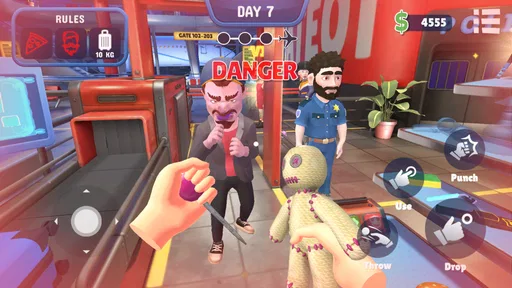
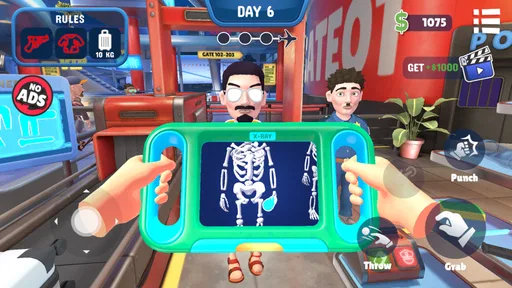
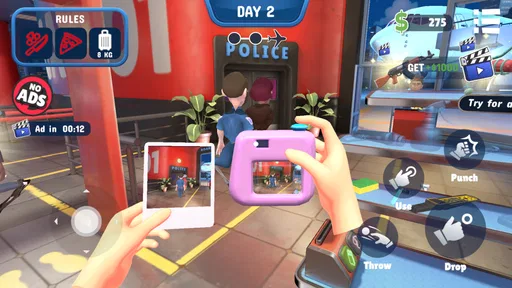
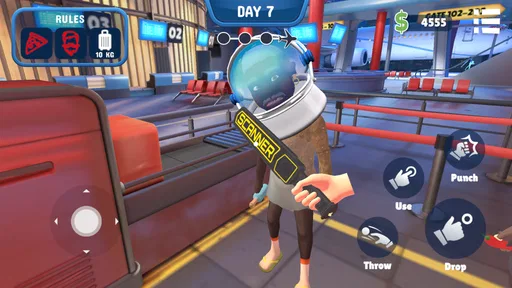
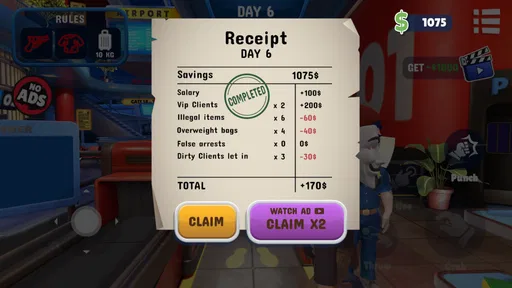


Our Review of I Am Airport Security
 Analysis by Appyee
Working an airport security desk sounds routine until every passenger becomes a small judgment call. I Am Airport Security turns that idea into a role-playing game built around deciding who should be allowed onto a plane. I found the central concept easy to understand within minutes, but the appeal comes from how quickly a simple inspection task can become a test of attention, consistency, and nerve.
Estoty’s game is free to download and aimed at Teen players, so it sits in a more mature space than a purely child-focused airport simulation. It is available for devices running Android 8.0 or later, and the current release is version 1.0.5. That makes it accessible to many existing phones, although the overall experience will still depend on how smoothly a particular device handles the game.
My first impression was that this is best approached as a short-session game rather than a deep airport-management simulator. You step into the security agent’s role, examine the people passing through, and make decisions that affect the flow of boarding. The fantasy is direct: you are not designing terminals or managing airline schedules; you are the person standing between a passenger and the aircraft.
How the airport-security role works in practice
The strongest part of the concept is its focus. Many role-playing games ask you to build a character, collect equipment, or explore a large world. This one narrows the role to observation and judgment. That change of pace is useful when I want something interactive but do not have the time or patience for a long quest.
A typical session works well as a quick break. I can imagine opening it while waiting for an appointment, playing through a few passengers, and putting it down without feeling that I have abandoned a complicated storyline. At the same time, the inspection setup gives each decision a little more weight than a basic tapping game. The challenge is not simply moving quickly; it is noticing what matters before approving someone.
That distinction is important for new players. If you treat every passenger as a speed test, the game can feel shallow. If you slow down enough to form a repeatable checking habit, the role becomes more interesting. I found it helpful to approach each case in the same order instead of reacting to the most obvious detail first. Consistency reduces careless decisions and makes the game feel more like a job simulation than random guessing.
One practical technique is to separate observation from action. First, I look at the passenger and the available information. Then I decide whether anything conflicts with the requirements. Only after that do I commit to the boarding decision. This extra pause is especially useful when several details appear at once, because it prevents a dramatic-looking clue from distracting me from a more important one.
The game also works for players who enjoy light moral pressure. Even when the controls are straightforward, deciding whether someone can continue creates a small sense of responsibility. That is the hook: the airport is familiar, but the player is placed on the other side of the checkpoint. You are not merely watching a security scene; you are responsible for the outcome.
A good fit for short sessions and focused attention
I would recommend it first to people who enjoy compact decision games, workplace simulations, and role-playing experiences built around a clear task. It is also a reasonable choice for someone who likes the idea of games such as document-checking or border-control simulators but wants an airport setting instead of a land crossing.
The experience is less suitable for anyone expecting a full aviation game. There is no reason to choose it if your main interest is piloting, building an airport, planning routes, or managing an airline. Those alternatives offer broader systems and longer-term strategy. This game’s identity is much narrower, and that narrowness is both its strength and its limitation.
It may also frustrate players who dislike reading visual details carefully. The basic premise depends on paying attention, so rushing through every passenger can undermine the point. I would not install it for someone looking for an idle game that plays itself. The appeal comes from making the decisions personally.
What the current release says about the experience
The current version, 1.0.5, places the game in an early stage of its life rather than presenting it as a long-established, feature-heavy role-playing title. I see that as a reason to judge the present experience on its core loop: does checking passengers and deciding who boards remain engaging after the initial novelty fades?
For me, the answer depends on expectations. The core idea is immediately recognizable and easy to return to, which is valuable for mobile play. However, players who need extensive progression, a large cast, or a highly developed narrative may find the airport checkpoint too limited. A focused game does not automatically become a deep one simply because its theme is unusual.
The release information also matters for people deciding whether to try it now or wait. A current version number shows that the game is being maintained as a product, but it does not by itself guarantee a particular direction for future updates. I would treat possible new scenarios, more varied passengers, or expanded decision rules as things to watch rather than promises.
That distinction keeps expectations realistic. I enjoyed the premise as it exists today, but I would not buy into the game based on imagined future systems. The right reason to install it is that the present checkpoint role sounds entertaining to you, not because you are assuming it will eventually become a full airport-management package.
How it compares with familiar alternatives
Compared with traditional role-playing games, this one removes much of the usual equipment and exploration. There is no need to learn a complicated combat system before the game becomes enjoyable. The role is understood through the act of inspection itself. That makes it more approachable, but it also means there are fewer layers for players who want character development.
Compared with document-focused inspection games, the airport theme gives the decisions a more immediate visual context. You are not only processing paperwork in an abstract office; you are imagining a queue of people trying to board a flight. That setting makes the premise more accessible to casual players, while fans of detailed bureaucratic simulations may still prefer a title with more formal rules and paperwork.
Compared with airport tycoon games, the scale is completely different. A management game lets you think about gates, staff, finances, and passenger satisfaction. Here, I am interested in the single checkpoint interaction. That makes it easier to play in spare moments, but it will not satisfy someone who wants to see an airport grow under their control.
The best comparison is therefore not “a smaller airport simulator,” but “a focused security-decision role-playing game.” Once I viewed it that way, the design made more sense. It is trying to make one job entertaining, not recreate every department in an airport.
Small habits that make the decisions more reliable
The first useful habit is to resist speed for its own sake. The game’s subject encourages quick judgments, but a careful scan is usually more rewarding than blindly approving a line of passengers. I found that treating each person as a separate case helped prevent the previous decision from influencing the next one.
The second is to create a mental checklist. I look at the person, inspect the relevant details, compare them with the boarding requirements, and then choose an action. This sounds simple, but it gives the session structure and makes mistakes easier to understand. If I make an incorrect call, I can identify whether I missed a clue or acted before checking everything.
The third is to use the game as a concentration exercise rather than background entertainment. Playing while distracted by another app or conversation makes the central task less satisfying. A short, focused session is better than a long one where I am tapping without noticing the details. This is one of the less obvious trade-offs: the game is convenient because it supports brief play, but it still asks for attention during those minutes.
A fourth consideration is device age. The minimum operating-system requirement is modest, so owners of older compatible phones can try it without needing the newest hardware. Still, compatibility is not the same as identical performance. If the interface feels slow or crowded on a particular device, lowering expectations about responsiveness is sensible before blaming the game’s design.
Free access and the purchase decision
The game is free, which makes trying the airport-security loop straightforward. That is a meaningful advantage for a concept that may appeal strongly to one player and barely interest another. I would rather test this kind of focused simulation personally than decide from its premise alone.
There are in-app purchases priced at $2.99 per item. That is worth remembering before handing the game to a younger player, especially because the content rating is Teen. I would review the device’s purchase controls in advance if children or shared devices are involved. The free entry point is inviting, but it should not be confused with an experience where every optional element is automatically cost-free.
For my own use, the purchase question comes down to whether the core inspection loop already feels worthwhile without spending. If I enjoy the decisions at the free starting point, an optional purchase may feel reasonable. If I am already bored by the basic task, paying will not solve the underlying mismatch. The game should earn continued attention through its role, not through pressure to unlock interest.
Who should install it, and who should skip it
I think it is a good choice for a player who likes unusual job-based games, quick role-playing sessions, and situations where careful observation matters more than reflexes. It can also suit someone who wants a game that is easy to explain: you work airport security and decide who may board. That clarity makes it approachable without requiring a long tutorial before the premise makes sense.
I would skip it if you want a traditional hero journey, extensive exploration, or a rich character-building system. The airport checkpoint is the attraction, so anyone uninterested in inspecting passengers will probably not be won over by the role-playing label alone. I would also look elsewhere if your favorite airport games are about construction, logistics, or airline economics.
Parents should consider the Teen rating rather than treating the bright mobile presentation as a sign that it is intended for very young children. The theme involves security decisions and the consequences of allowing or stopping people, which gives it a more mature framing than a simple travel-themed puzzle.
The game has attracted a 4.4 average from around 4.8 thousand ratings and has passed one million installs, so it clearly has an audience beyond a tiny experiment. I read those figures as evidence that the central idea connects with many mobile players, not as proof that it will fit everyone. A popular concept can still be too specialized for someone who prefers action or management.
What existing players may notice over time
Players who started with an earlier release should approach version 1.0.5 as the current reference point rather than relying on first impressions from launch. In an inspection game, even small adjustments to presentation, pacing, or case variety can change how repetitive the work feels. I would pay attention to whether later sessions continue to reward careful checking instead of becoming a routine sequence of taps.
The most important long-term question is variety. A security-agent game needs enough difference between passengers and decisions to keep the checkpoint from feeling like a fixed script. If the situations remain varied, the narrow premise can stay engaging. If they become predictable, players who need constant novelty may move on quickly.
Another thing to watch is how the game balances fairness with surprise. A good case should make sense after the player notices the relevant clue. If outcomes feel arbitrary, the role loses credibility. I prefer mistakes that teach me to inspect better, not mistakes that make me feel I was expected to guess information the game did not communicate clearly.
My final take on the airport checkpoint
I Am Airport Security is most successful when it stays focused on the awkward responsibility of deciding who gets through. I like that it offers a recognizable job, turns observation into the main skill, and works naturally as a short mobile role-playing experience. Its free entry point makes experimentation easy, while the Teen rating and optional purchases are details worth considering before installing it for a shared or younger user.
My recommendation is conditional but positive: try it if the idea of checking passengers sounds more appealing than fighting monsters, building terminals, or managing an airline. Use a careful inspection routine, play in focused bursts, and judge the game by the current checkpoint loop rather than by hopes for future expansion. If you need a broad progression system or a large airport sandbox, choose a different category. If you want a compact game built around attention and judgment, Estoty’s airport-security role has a clear identity and is worth a look.
Verdict
Strengths of I Am Airport Security
- Fun checkpoint gameplay with quick decisions and clear objectives.
- Simple controls make it easy for new players to start playing.
- Short levels are convenient for casual gaming sessions.
- Humorous situations add personality to the airport setting.
- Progression unlocks new challenges and keeps gameplay moving.
Limitations of I Am Airport Security
- Gameplay can become repetitive after several security checks.
- Some tasks rely more on tapping than meaningful strategy.
- Ads may interrupt play, especially between completed levels.
- Later challenges may feel limited for experienced players.
- Performance can vary on older phones or budget devices.
Other Releases by Estoty
View All
I Am Cat
Simulation4.5

Frost World - Snow Survival
Role Playing3.9

I Am Security
Role Playing4.6

I Am Monkey
Simulation4.7
Similar Picks in This Category
View All
Hair Dye
CrazyLabs LTD4.4

Monster High™ Beauty Salon
CrazyLabs LTD4.5

Bus Simulator - Bus Games 3D
Jima Apps4.4

Flight Pilot: 3D Simulator
Wildlife Studios4.1


Super Stylist Fashion Makeover
CrazyLabs LTD4.4
Frequently Asked Questions
What is I Am Airport Security about?
I Am Airport Security is a casual simulation game in which you work as an airport security officer. Your main duties include checking passengers, inspecting luggage, identifying suspicious items, and deciding who can safely pass through the checkpoint. The game combines simple controls with short scenarios, gradually introducing more challenging cases and unexpected situations as you progress.
Is I Am Airport Security free to download and play?
I Am Airport Security can generally be downloaded for free on supported mobile devices, but the free version may include advertisements and optional in-app purchases. These purchases can provide additional content, remove ads, or make progression more convenient. Before downloading, check the store listing for the current pricing, available payment options, and whether certain features require an internet connection.
Is I Am Airport Security suitable for children?
The game is easy to understand and does not require advanced gaming experience, making it accessible to many younger players. However, some airport-security scenarios involve suspicious passengers, confiscated objects, or humorous conflict. Parents should review the age rating and store description, especially because advertisements and optional purchases may be present. Parental controls are recommended for younger users.
Does I Am Airport Security require an internet connection?
Basic gameplay may work without a constant internet connection, allowing you to complete some security-checking tasks while offline. Nevertheless, certain functions, including advertisements, purchases, updates, cloud features, or online rewards, may require internet access. Availability can vary between Android and iOS versions, so it is best to test the game after installation and keep the app updated.
What should I know about the gameplay before downloading?
I Am Airport Security is designed for quick, casual sessions rather than a complex airport-management experience. You will inspect documents and baggage, make decisions, and react to unusual events using straightforward touch controls. The gameplay can become repetitive for players who prefer deep strategy, but its short levels, humorous situations, and gradual challenges make it suitable for relaxing play.
Play our best games!


